
PICS Care System
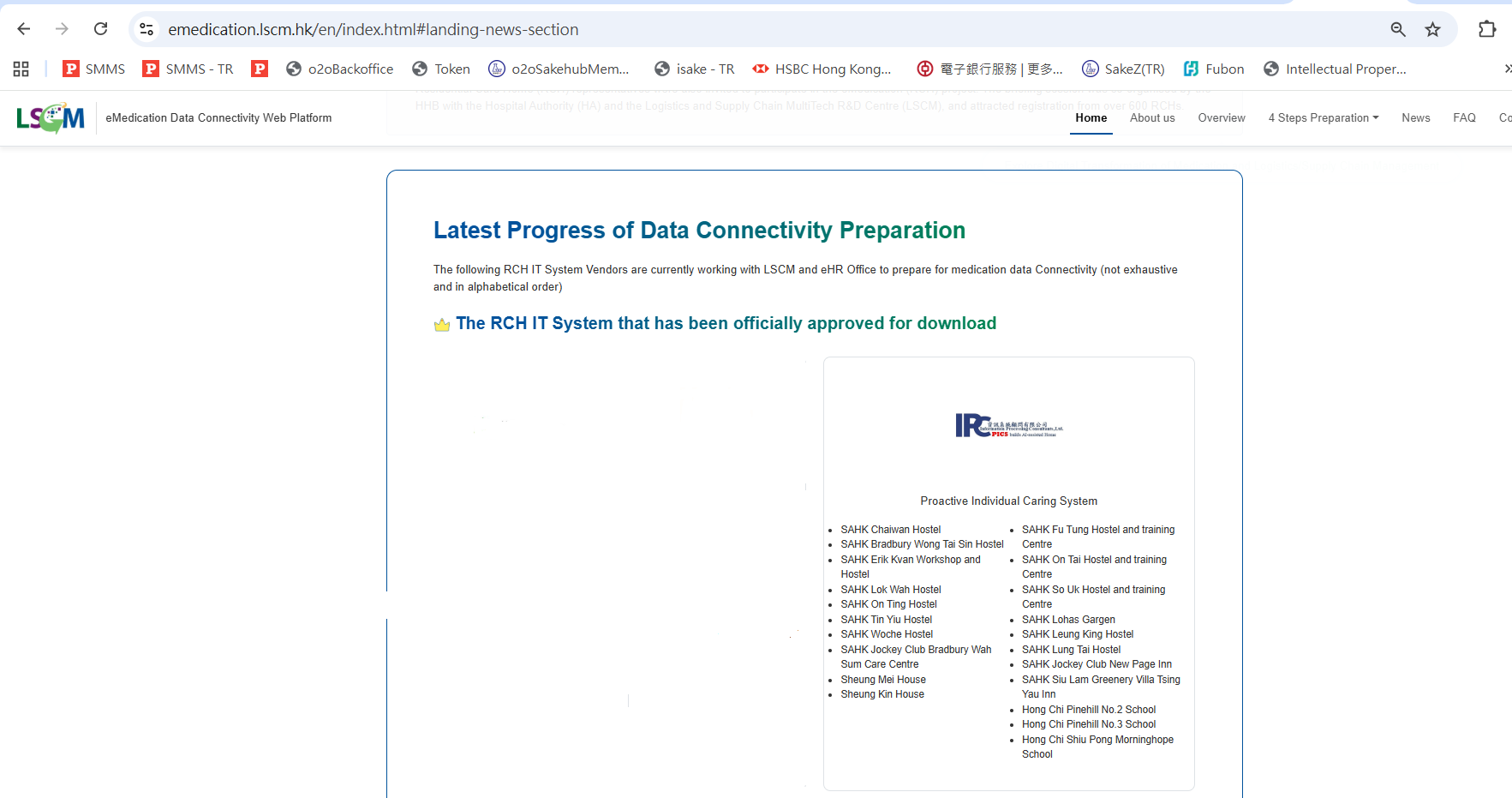
Proactive Individual Caring System
A Comprehensive Care Home Management Powered by AI
PICS transforms residential care homes from opaque, paper-based facilities into transparent, data-driven nodes in an integrated healthcare network—where every action is accountable, every resident is truly seen, and care evolves from crisis response to proactive wellbeing.
Ensuring equitable, safe, efficient, and accountable care for vulnerable populations under the Social Welfare Department mandate
Award-Winning Innovation
Recognized excellence in healthcare technology by Hong Kong ICT Awards Judging Panel

Hong Kong ICT Awards
Smart Living (Elderly Care) Award
The application demonstrates an innovative solution with high adoptability in addressing the needs in medication management in elderly homes.
— ICT Awards Judging Panel
Hong Kong ICT Awards
Smart Living (Elderly Care) Award
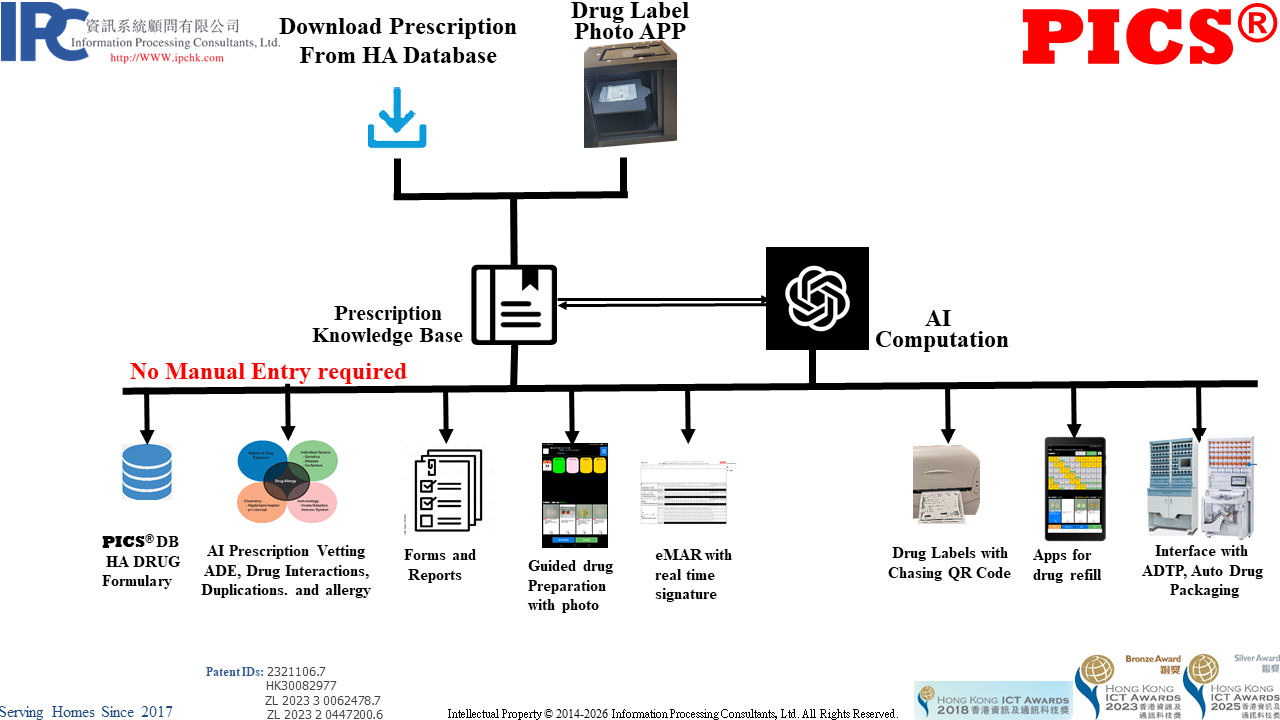
This technology uses AI to improve the efficiency and accuracy of copying drug label prescriptions, while minimizing the possibility of human error and reducing the workload of nurses.
— ICT Awards Judging Panel

Hong Kong ICT Awards
Smart Living (Elderly Care) Certificate of Merit
The system generates individual treatment records and care plans while converting diverse data into unified formats and provides consolidated medical alerts, creating an integrated healthcare solution that significantly reduces paperwork for care staff.
— ICT Awards Judging Panel
Three-time recognition for excellence in elderly care innovation
Continuous evolution from medication management to comprehensive care integration
See PICS in Action
Explore our comprehensive care management system through demo videos and system flows
Live Video
Watch demonstration
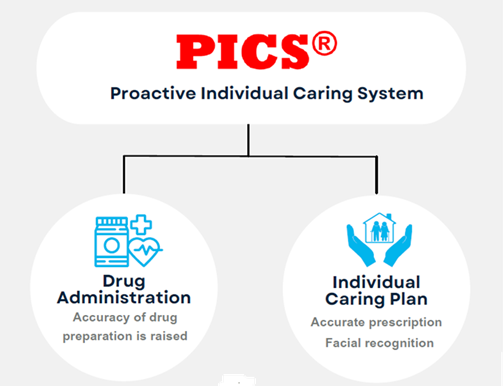
Core Capabilities
Every feature designed to empower staff, protect residents, and ensure accountability
Medication Management
Digital MAR sheets with real-time tracking, automated alerts, and complete audit trails for every medication administration
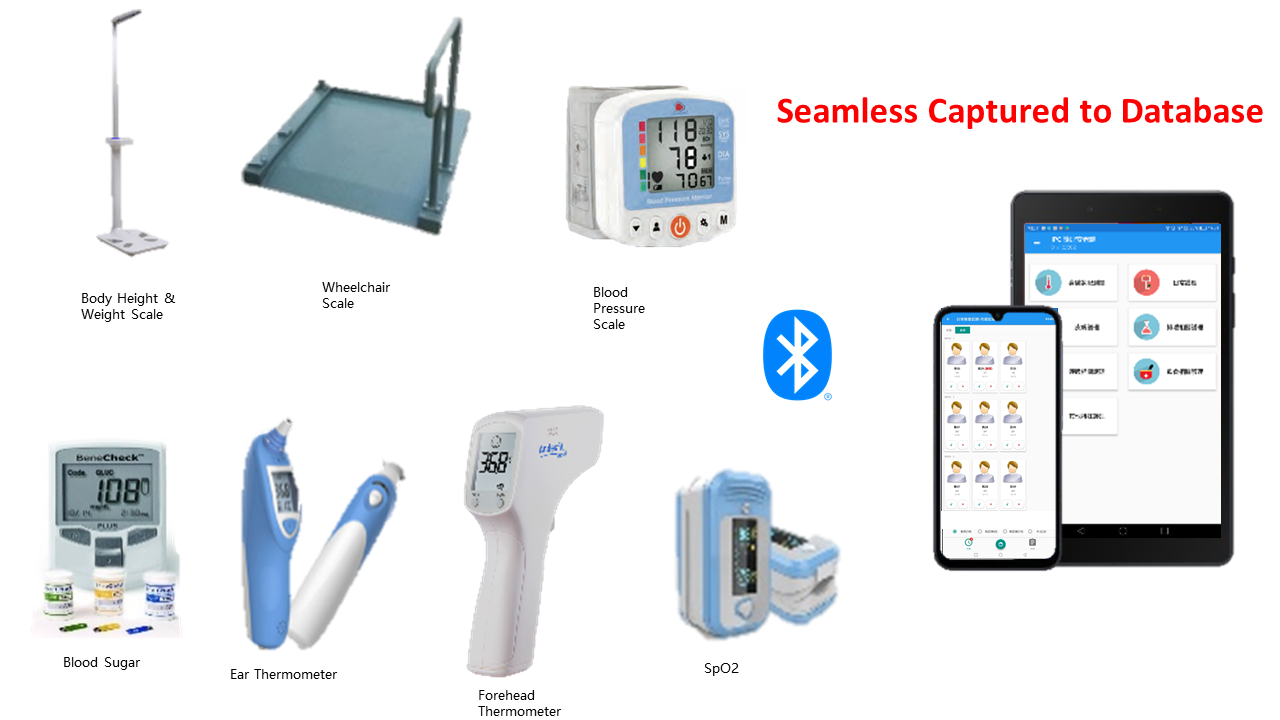
Vital Signs Monitoring
Track health metrics with trend analysis and early warning systems for proactive intervention
Care Planning
Personalized care plans with daily task management and progress tracking for each resident
eHealth Integration
Seamless connection with hospital systems for accurate discharge information and medical history
Digital Documentation
Paperless records with instant access, version control, and compliance-ready reporting
Smart Alerts
AI-powered notifications for medication schedules, vital sign anomalies, and care tasks
How PICS Improves Public Services
Public services, particularly those overseen by bodies like the Social Welfare Department (SWD), aim to ensure equitable, safe, efficient, and accountable care for vulnerable populations. PICS enhances these goals directly through four foundational pillars:
Enhances Resident Safety & Quality of Care
AI drug scanning and eMedication download drastically reduce human error in transcription (wrong drug, dose, time), preventing adverse drug events—a critical issue in elder care. By tracking trends in vitals, behaviors, and medication responses, PICS enables early intervention before minor issues become crises requiring hospitalization.
Strengthens Regulatory Compliance & Accountability
Automated SWD-mandated reports ensure consistency, completeness, and timeliness, giving the Social Welfare Department higher-quality, auditable data for monitoring standards across all RCHs. Every medication action and care note is digitally timestamped and linked to staff ID, creating an immutable audit trail.
Promotes Systemic Efficiency & Resource Optimization
Automating manual data entry (prescriptions, reports) frees up nurses and care workers to spend more time on direct, face-to-face resident care—the core service they are meant to provide. Aggregate data reveals patterns for better resource allocation, staff training, and evidence-based policy making.
Fosters Interoperability & Integrated Care
eHealth integration bridges the critical gap between public healthcare (Hospital Authority) and social care (RCHs). This ensures care homes have the most accurate, up-to-date information from hospital discharges, reducing fragmentation and improving continuity of care—a key goal of modern public health systems.
Value Proposition: Transformation Summary
From opaque, paper-based facilities to transparent, data-driven nodes in an integrated healthcare network—where every action is accountable, every resident is truly seen, and care evolves from crisis response to proactive wellbeing
The investment shifts from cost-centric to value-centric—
delivering a more humane, safe, and sustainable long-term care system for the public
Investment & Returns Analysis
Understanding the upfront costs and multidimensional benefits of digital transformation
Investment Required
Upfront & Ongoing Costs
1Initial Capital Expenditure (CapEx)
- •Software licensing/development for PICS platform
- •Hardware: tablets, scanners, computers, cloud infrastructure
- •Integration fees for eHealth and external system APIs
2Operational Expenditure (OpEx)
- •Subscription/maintenance: updates, cloud hosting, tech support
- •Comprehensive staff training for varying tech literacy
- •Change management: transition from paper to digital workflows
3Indirect & Risk Costs
- •Robust cybersecurity measures and PDPO compliance
- •Infrastructure dependency: contingency plans for outages
Return on Investment
Multidimensional Value
1Tangible Financial Benefits
- Reduced medication errors: Lower costs from emergency call-outs, hospitalizations, legal liabilities
- Staff time savings: Hours saved daily = increased capacity without hiring
- Reduced operational costs: Elimination of paper, storage, physical filing
2Intangible & Quality Benefits
- Better health outcomes: Fewer errors, fewer hospital readmissions, higher quality of life
- Enhanced professionalism: Modern tools improve morale, reduce turnover
- Risk mitigation: Audit trail protects organizations from penalties and disputes
- Reputational gain: Position as safer, modern, evidence-based care provider
3Strategic Benefits for Public Services
- Standardization: Consistent care delivery across all RCHs
- Data for policy: Real-time sector insights for SWD planning and funding decisions
Investment Justification
The upfront costs are primarily financial and managerial (tech investment, training). The benefits are multidimensional: financial savings from efficiency and error reduction, qualitative improvements in care and staff work life, and strategic gains in system-wide oversight and planning.
This represents a shift from cost-centric thinking to value-centric outcomes, where the ultimate return is a more humane, safe, and sustainable long-term care system for the public.
The Complete Transformation
For the public service, PICS transforms residential care homes from being opaque, paper-based facilities into transparent, data-driven nodes in an integrated healthcare network.
Investment
Financial and managerial costs: tech investment, training, change management
Returns
Multidimensional: financial savings, quality improvements, strategic oversight gains
Ultimate Goal
A more humane, safe, and sustainable long-term care system
Value-Centric Philosophy
The investment is justified by a shift from a cost-centric view to a value-centric one, where the ultimate return is not just financial—it's the creation of a care ecosystem where every action is accountable, every resident is truly seen, and wellbeing is proactive rather than reactive.
This is the future of residential care—transparent, intelligent, and deeply human.
Ready to Transform Your Care Home?
Join the movement toward safer, more accountable, and more humane elderly care in Hong Kong.
Schedule a Demo